Down the AI Rabbit Hole: How I Accidentally 10x'd What's Possible
Download PDF ↓
I had no idea just how far down the rabbit hole I was about to go. What began as a little experimentation with ChatGPT became an unexpected journey through problem-solving, learning, writing, creativity and eventually building my own software. And somewhere along the way, I discovered something I'd been looking for years earlier: a way to 10x what I could accomplish.
When I first came across the idea of 10xing, it captured my imagination as something I wanted to achieve in several areas of my life but I had no clear idea how I could make that kind of leap. And I certainly didn’t expect artificial intelligence to play a part.
About eighteen months ago, I first started playing around with ChatGPT. At first, I was somewhat reluctant to embrace artificial intelligence. I had reservations, particularly about privacy, and wasn't entirely convinced that AI had a place in my life. Today, I use it almost every day. Not simply to find information or answer questions, but to explore ideas, solve problems, develop my thinking, write articles and even build my own software. The transformation hasn't been in who I am. I've always been curious and willing to try new things. What's changed is the speed, ease and scope with which I can put those qualities to work. And perhaps even more importantly, it's expanded what I'm willing to attempt.
AI hasn't made me more capable, creative or confident. It's dramatically accelerated what I can do with the capabilities I already have.
It began with a conversation
My introduction to AI was hardly a grand technological ambition. I was unwell, confined to bed and unable to see people. Friends had been telling me about ChatGPT for some time and, finally, I began experimenting with AI, initially more for entertainment and company than anything particularly purposeful. It was fun. I could have conversations, explore subjects that interested me, ask questions and follow whatever curious line of thought occurred.
Then, gradually, something shifted and I began using AI for practical problems. How to fix things around the house, how to change a water filter, how to connect audiovisual equipment, how to approach difficult relationships. And, increasingly, how to manage health, nutrition and fitness.
AI became a tool I could use whenever I wanted to understand something, work through a problem or figure out what to do next. One particularly mundane example captures this beautifully. I'd disconnected the leads behind my television and amplifier and put them back incorrectly, and had no sound from my TV for several months. I resisted searching manuals, didn’t have an easily accessible knowledgeable friend, and wasn’t about to pay a technician to sort it out. Finally, I thought of AI and took photographs of the connections, showed them to ChatGPT and asked where everything should go. Minutes later, the problem was solved.
It wasn't a spectacular technological achievement. It was something better: an ordinary frustration resolved almost immediately. And I began noticing how often that was happening.
From answers to understanding
As my use of AI expanded, I discovered that its greatest value wasn't always in the answers it provided. It was in the conversations themselves.
I've always enjoyed exploring ideas, questioning assumptions and trying to understand how things fit together. But thinking can be a slow process, particularly when you're working through something complex without another person immediately available to discuss it.
With AI, I had a conversational sounding board that was available whenever an idea occurred. I could begin with a half-formed thought, explain what I was considering and receive an interpretation or an alternative perspective. Sometimes the response would be useful immediately. Other times I'd realise that it wasn't quite what I meant or there was an important context that I’d left out. And that was often even more useful. Because in explaining why an interpretation was wrong, I would clarify what I actually thought and the conversation itself became part of my thinking process.
I began experiencing what felt like daily insights. Ideas that had been floating around in my mind suddenly connected. My understandings deepened. Initial questions led to more interesting questions. It was as if I had an intellectual workbench permanently available to me. I could place an unfinished idea on that bench, turn it around, examine it from several angles, take it apart and put it back together. Sometimes I discovered that the idea wasn't quite what I thought it was. Sometimes something much more interesting emerged.
And because I was able to do this through conversation, simply by speaking my thoughts aloud, the process felt remarkably natural. I was not waiting for inspiration to arrive fully formed. I was working with ideas while they were still forming.
The extraordinary acceleration
This has had an enormous effect on my productivity. Work that once might have taken me weeks or months can sometimes be accomplished in hours. Academic writing is a particularly striking example. The intellectual work still matters. I still need to develop an argument, assess evidence, challenge assumptions and decide what I actually want to say. AI doesn't remove my responsibility for any of that. But it can accelerate the process of exploring, organising, drafting and refining ideas to an extraordinary degree. What once involved long periods of solitary research and writing can now become an intense, productive dialogue. I can explore an argument, identify weaknesses, consider alternative interpretations and develop a structured draft in a fraction of the time.
Of course, faster doesn't automatically mean better. Facts and references still need checking, and AI can be confidently wrong. But the difference in what I can accomplish is substantial. It feels like a tenfold increase in my productivity. The distance between having an idea and bringing it to fruition has become remarkably short.
When AI wasn't enough
One of the more surprising developments came from discovering AI's limitations. For about a year, I had been using ChatGPT extensively to support my health and fitness journey through LeanSeven. I trained it to be my fitness coach, and it helped me calculate nutritional information, plan meals, understand training principles and interpret my progress.
But I kept running into frustrations. Information I'd supplied previously wasn't always available when I needed it. Foods and meals I'd already calculated sometimes had to be entered and calculated again. Details were scattered across conversations. Context could be lost. What I wanted to be a dependable, ongoing record was often an awkward process of reconstructing information. I tried various solutions. Spreadsheets. Templates. Databases. Different ways of saving and retrieving information. Some were useful, but none provided the smooth, reliable experience I wanted.
I began recognising a fundamental distinction. Conversational AI was enormously valuable for discussing, interpreting and exploring information. But conversation alone wasn't necessarily the best way to store structured records and perform the same calculations repeatedly. I needed something different. And then, quite unexpectedly, I discovered I could build it.
From AI user to app creator
A friend sent me a link to a free masterclass about building your own app using AI. I watched it. Followed the instructions. And within a few hours, I had built my first application on my phone.
I was mind-blown.
I had no previous programming experience. Yet there it was. Something I'd imagined, now functioning on my phone.
I called that first app MacroMate, a food-tracking app. Initially, it was about improving how I planned and recorded food and nutritional information. But as I developed it, I began recognising opportunities to solve problems that went beyond simple record-keeping.
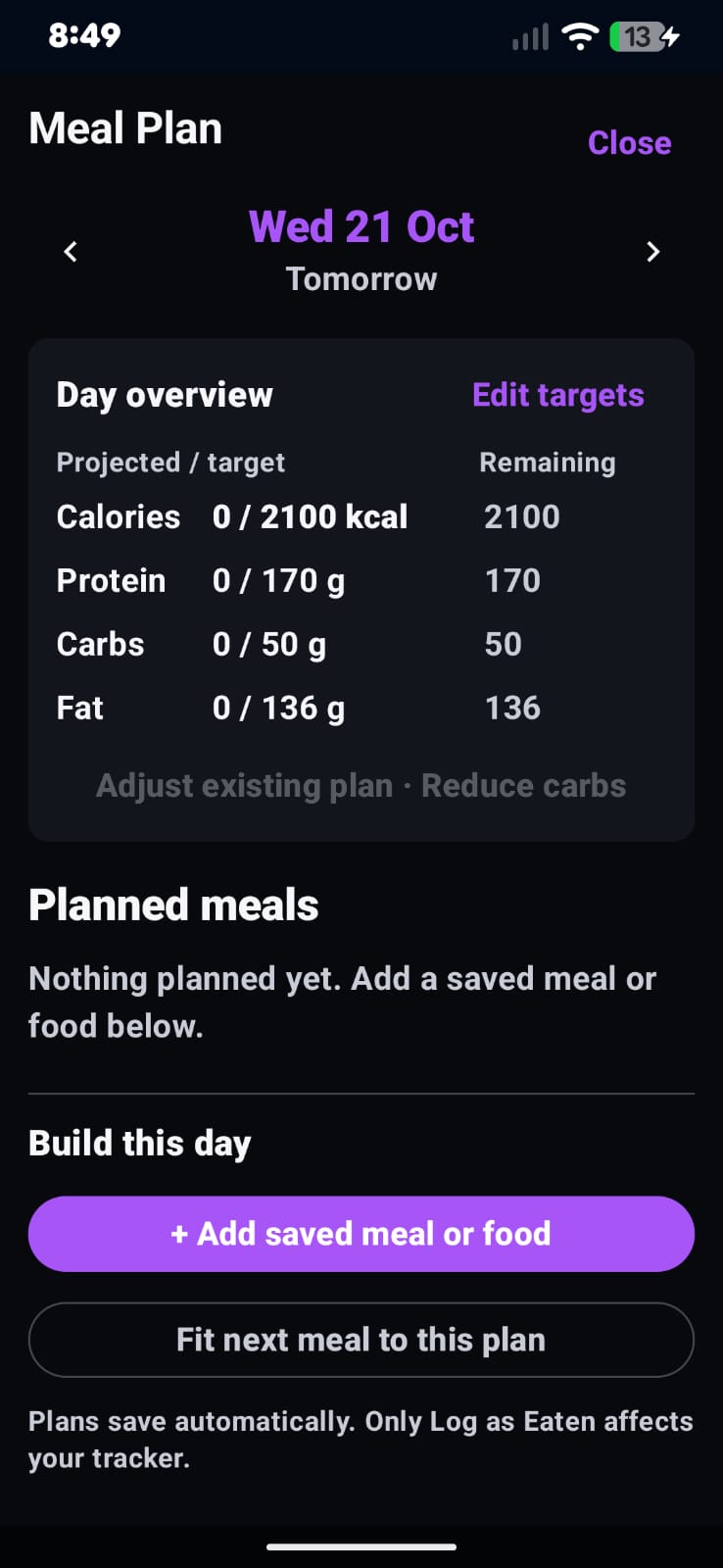
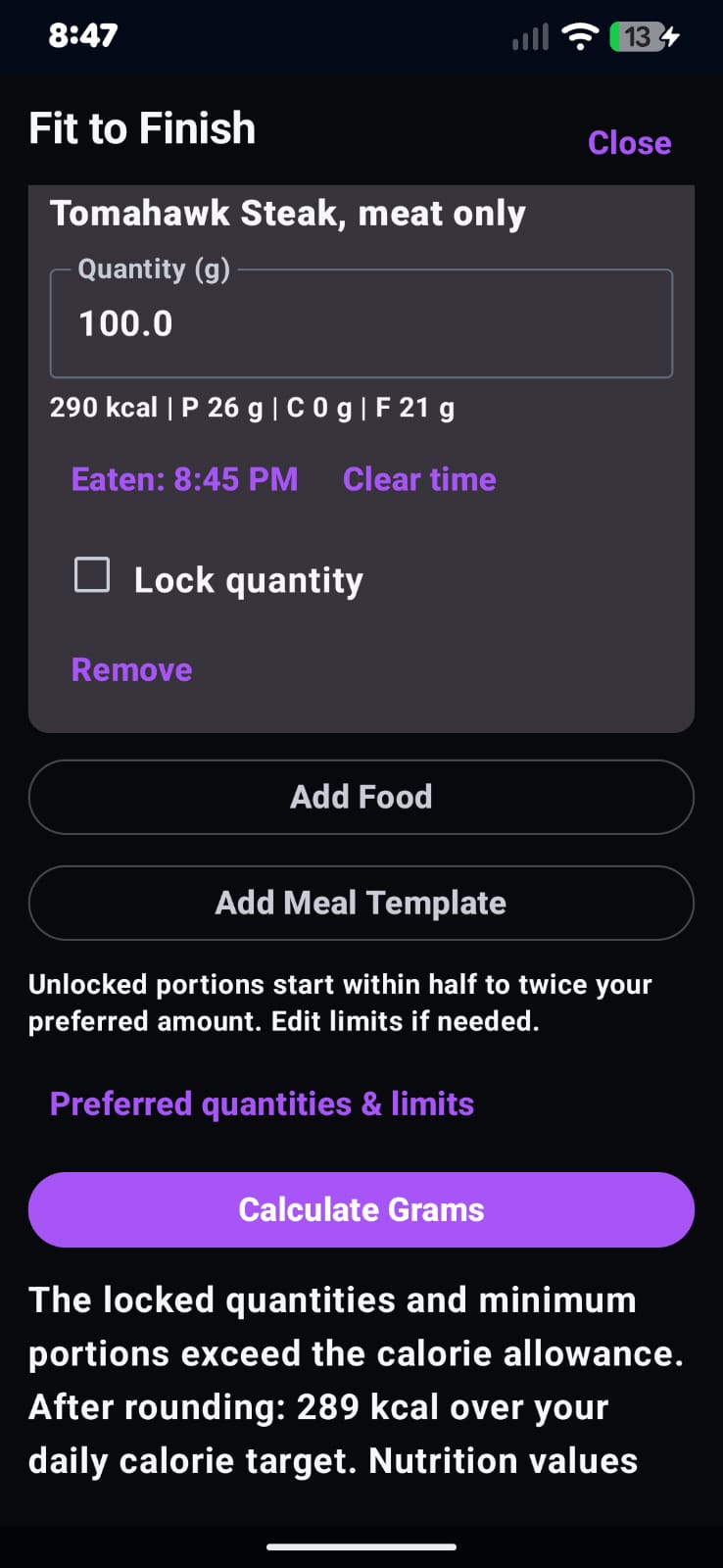
For example, during my first several months following LeanSeven, I'd been remarkably consistent in hitting my daily nutritional targets. I was logging my food within a gram or a few calories of my intended intake by asking Chat for the exact gram measure of my final meal of the day that would land me exactly on my targets.
Having moved to logging foods on MacroMate (using it much like any other food tracker), I had stopped asking Chat to balance that final meal of the day. I was still hitting my weekly average most of the time, but the days were more volatile – some going way over my targets, then others going significantly under my targets to balance the week. Some volatility can be accounted for, but I was aiming for consistency.
That’s when I realised that I needed a better system to support my eating plan. That insight helped drive the development of MacroMate, eventually adding a feature I called ‘Fit to Finish’ that helps me plan food choices against my remaining nutritional targets. Instead of simply recording what I've eaten, I can use the software to help work out how much to eat of my intended final meal of the day.
I'd moved from recording decisions to supporting decisions. And that was only the beginning.
Building tools around real problems
As my confidence in the development process grew, I began creating other applications. Not because I've decided to become a software developer. And certainly not because I want to launch a software business. Rather, I am now using the coding arm of AI – Codex in ChatGPT (or Anthropic’s equivalent, Claude Code) to solve real-life problems. Here’s an example using the integrated fitness tracker I built.
During the earlier stages of fat loss, progress had been relatively easy to recognise. The numbers on the scales were falling, my body measurements were reducing, and that provided regular positive feedback. But as I moved into maintenance and focused more on improving body composition, the feedback changed. The scales no longer provided that regular sense of achievement. My weight trend flattened, and sometimes moved upwards, even as I continued working towards improving my body composition. I noticed myself looking too heavily for outcomes that weren't necessarily expected to change in the same way during this phase.
I was still doing the important work: following my nutritional plan, training, moving, paying attention to recovery, and building consistency. But I needed a way to recognise those daily accomplishments.
So I developed Lark’s Tracker that brings my information together and gives me feedback about how consistently I'm following my plan.
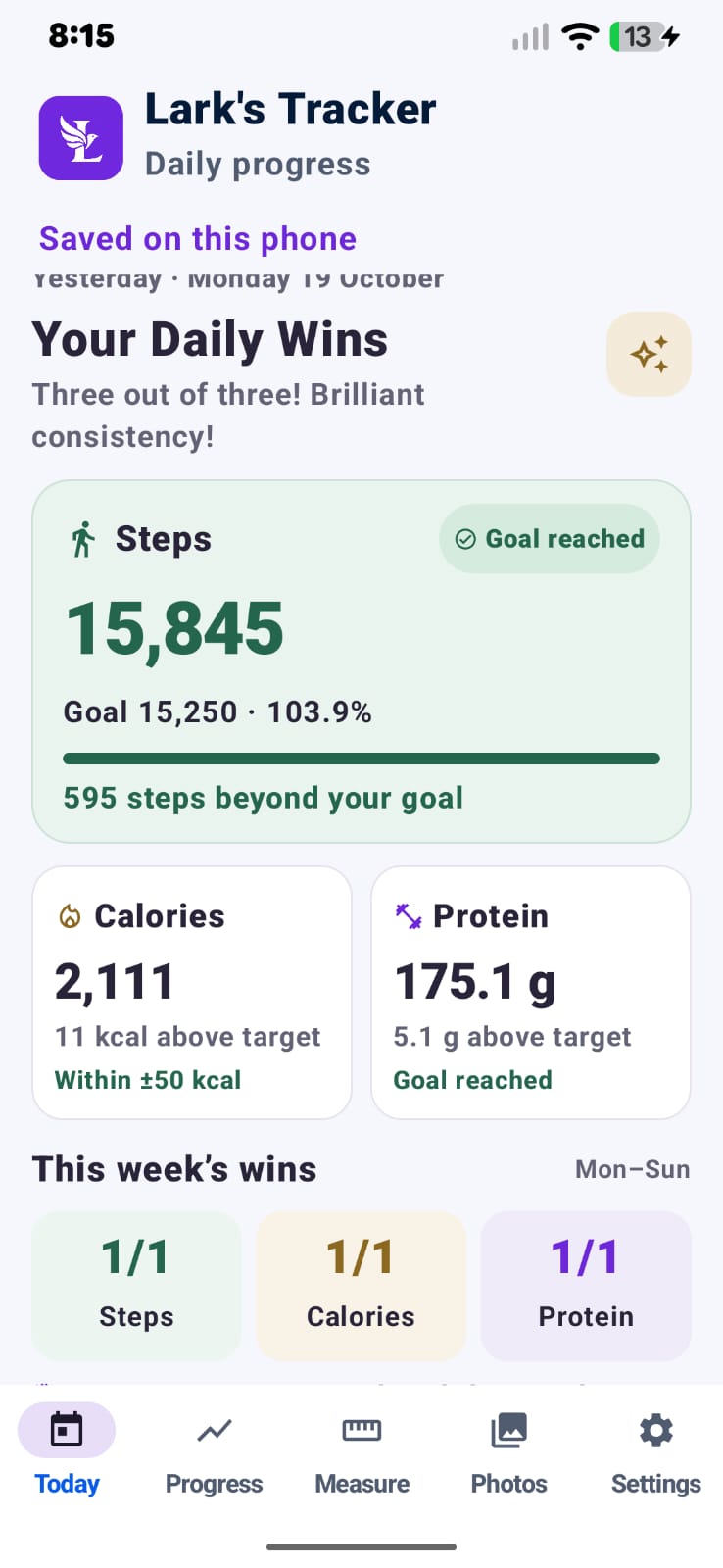
It helps me focus on the actions I can control rather than becoming preoccupied with outcomes that take longer to become visible. I changed what I was measuring so that the feedback matched the phase I was in.
None of this means that I’m guaranteed a particular physical result. But it does mean I have a better way to recognise and reinforce the behaviours that support my goals.
MacroMate helps me execute the plan. My tracker helps me recognise that I'm executing the plan. And AI remains a conversational partner for interpreting the information, questioning assumptions and thinking through what it means. Different tools, working together.
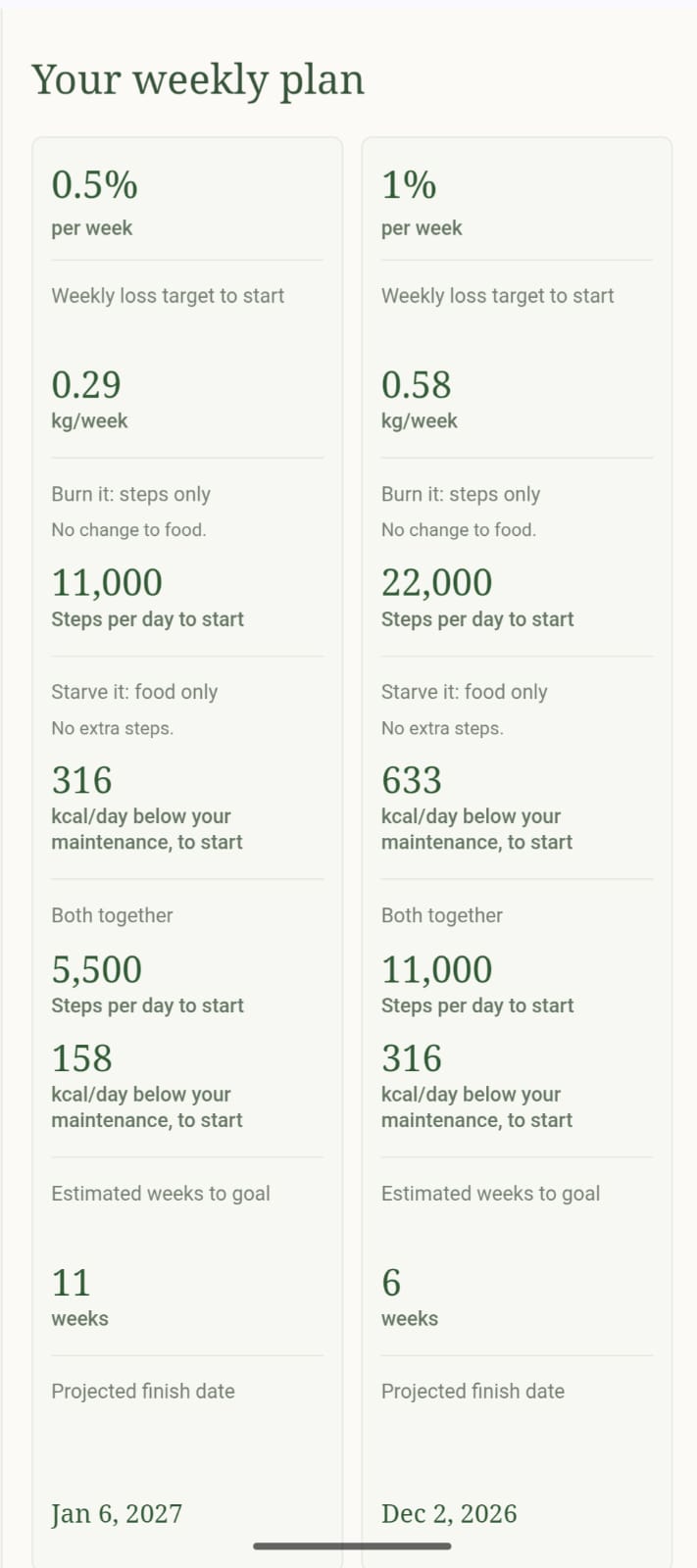
I can take an article that explains the numerical calculations behind fat-loss targets and projected timelines and turn it into an Excel calculator - as I did recently, with a post by Anthony Phaesse about how to calculate weekly targets, deficits, steps and find a projected finish date. Using AI, I took his written explanation to a practical tool in a remarkably short time. This illustrates how I no longer have to accept the tools available to me; I can build my own.
I shared the calculator with Anthony, who subsequently incorporated the idea into LeanSeven's Body Blueprint, making the calculations accessible to others.
From "How would I do that?" to "Why don't I try?"
The most significant change from using AI isn't simply that I can accomplish familiar tasks faster. It's more that I'm able to attempt things I might never previously have considered practical.
I've always been someone who enjoys jumping into ideas and making things happen. But some ideas require specialist skills, considerable time or money, or access to expertise I don't have or can't readily obtain. Previously, I might have decided a project wasn't worth the effort, or never considered attempting it at all. Now I can ask a different question: Can I do this with AI?
Increasingly, I'm discovering that the answer is yes. Sometimes it takes more iterations than I expect. The first attempt rarely gets me all the way, nor do I expect it to. Repeated input helps establish the parameters, and each step clarifies my vision as I see what AI builds. App-building requires testing. Calculations need checking. Features don't always behave as intended. There are frustrations, mistakes and limitations. But the barrier to experimenting has fallen dramatically. I can try something, see what happens, identify what needs changing and work towards improving it.
AI hasn't made me more adventurous. It has reduced the practical barriers to acting on the ideas I already had.
From assistant to creative partner
Looking back over these 18 months, I can see how my understanding of AI has evolved. I began as a reluctant, somewhat sceptical user and very quickly discovered the pleasure of conversation. Then I began using AI as a practical assistant for everyday life, getting answers to my questions.
More recently, almost without noticing the transition, it has become a creative partner. Today, I use it to explore ideas, develop arguments, write articles, create images, design tools and solve problems. I bring my experience, curiosity, knowledge and ideas and AI offers possibilities, interpretations, information and ways of developing them.
I evaluate those suggestions, challenge them, correct them, reject some and build on others. And it is through that exchange, that my ideas often become richer and more fully developed than they were when I began. The process is collaborative, although the responsibility for deciding what's accurate, useful and worth pursuing remains mine.
And I haven't abandoned my original reservations about AI. Privacy still matters. Accuracy matters. Reliable information storage matters. Understanding the limitations of the technology matters. In fact, some of my most useful creations have emerged precisely because I encountered those limitations and wanted to find better ways of working. My enthusiasm hasn't grown because I've decided AI is flawless. It's grown because I've learned how to use it more effectively.
What 18 months have taught me
I didn't set out to build applications. I didn't set out to become a sophisticated user of artificial intelligence. I certainly didn't imagine creating my own fitness software without knowing how to write code. I simply began experimenting.
One conversation led to another. One problem suggested a solution. One new capability opened the door to something else.
Looking back, I can see the unexpected connection to that earlier ambition to 10x my results. I imagined it would require some entirely different approach. Instead, AI became a way to accelerate my learning, writing and problem-solving ... and to attempt projects I might never otherwise have begun. Not everything is ten times faster, but the change in what I can bring to fruition feels extraordinary.
That's the message I'd most like to share. You don't have to start with a grand project or an ambitious plan. You can begin with a question. A frustration. An idea. Something you've always wanted to understand, fix, write or create. And see where the conversation takes you.
For me, the greatest discovery hasn't been that AI can answer questions, write text or generate software. It's been how dramatically it can accelerate the process of turning my own thinking into something tangible. During my recent visit to Sweden, staying in a cottage in the countryside, I took a photograph of ripples spreading across a still lake after throwing a stone into the water. It was during that same stay that I attended the AI masterclass and built my first app. Looking at that photograph now, the connection seems particularly fitting. One small action. An expanding circle of possibilities. I had no idea, when I built that first little application, just how far the ripples would travel.
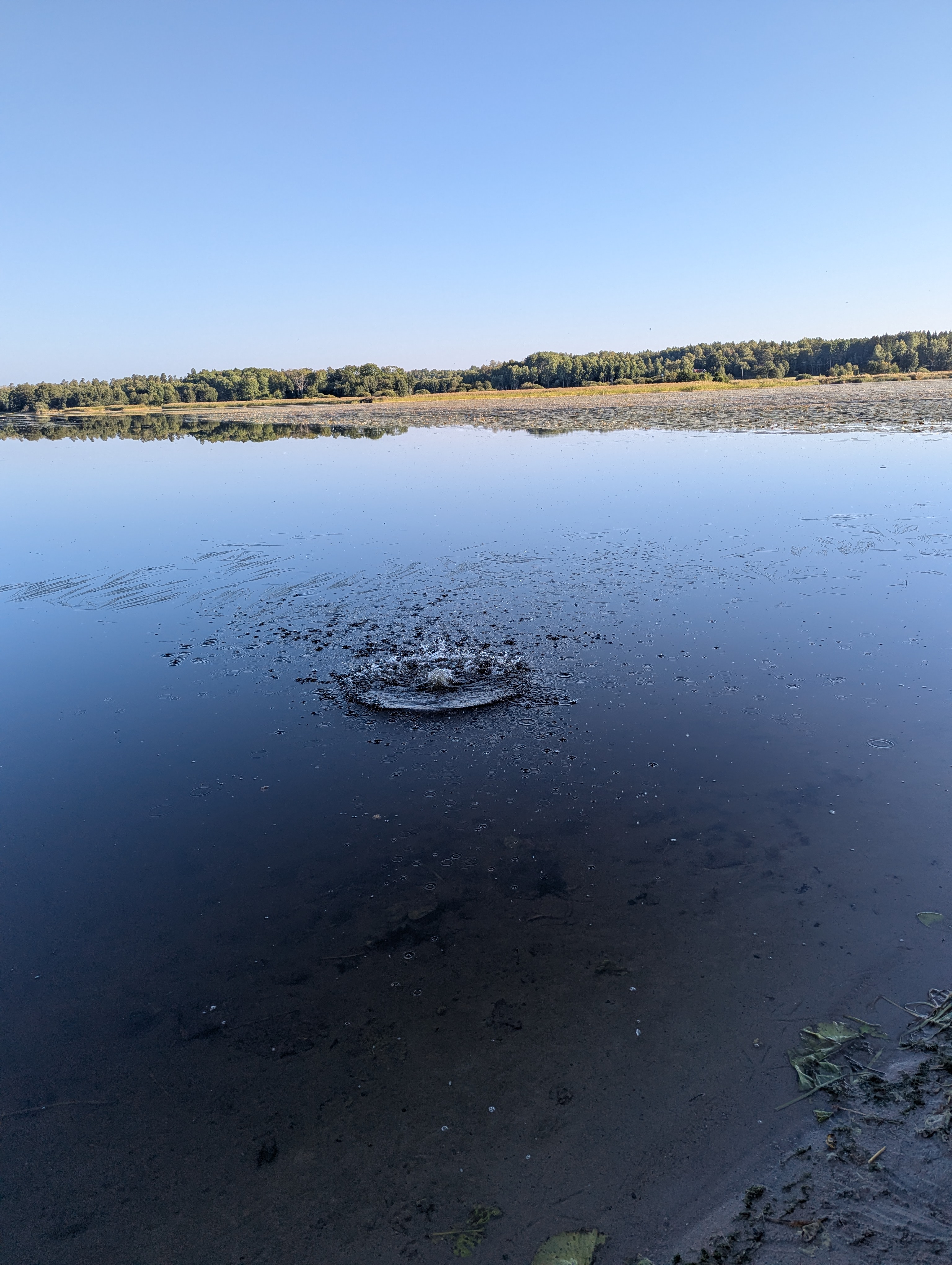
I already had the curiosity, the ideas and the willingness to act. AI has made it possible to take those ideas further, faster, and sometimes into territory I wouldn't previously have attempted.
AI hasn't changed who I am. It's changed what's possible for me to do with who I already am.
A note about the applications
The MacroMate food logger, Fit to Finish and Lark's Tracker featured in this article are personal projects I've developed with the assistance of AI to support my own needs. They're shared here as examples of what's possible, rather than as commercial products, and are not currently available for sale or public distribution.
The LeanSeven Body Blueprint is a separate, publicly accessible tool developed by LeanSeven, incorporating an idea I shared with Anthony. Readers can explore it at https://leanseven.co/blueprint.
Acknowledgements
I'd like to acknowledge two important influences on the journey described in this article.
1. Anthony Phaesse and LeanSeven
My health and fitness journey through LeanSeven has provided much of the knowledge, structure and practical framework that inspired the development of my nutrition and fitness applications. Anthony's teaching has encouraged me to look beyond outcomes, understand the importance of consistent behaviours and develop systems that support long-term progress. The applications I've built are my own adaptations of these principles to suit my personal needs. https://leanseven.com.au/
2. Carlz Söderström and Tomorrow Lab
A special thank you to Carlz Söderström, whose free app-building masterclass introduced me to the extraordinary possibilities of AI-assisted software development. That experience was a turning point. Within hours, despite having no previous programming experience, I'd built my first application on my phone. It opened the door to an entirely new way of solving problems and bringing ideas to life. Carlz's work and the Tomorrow Lab community continue to represent the spirit of curiosity, experimentation and practical creativity that inspired me to begin. https://www.skool.com/tomorrowlab/about https://carlzjsoda.com/